

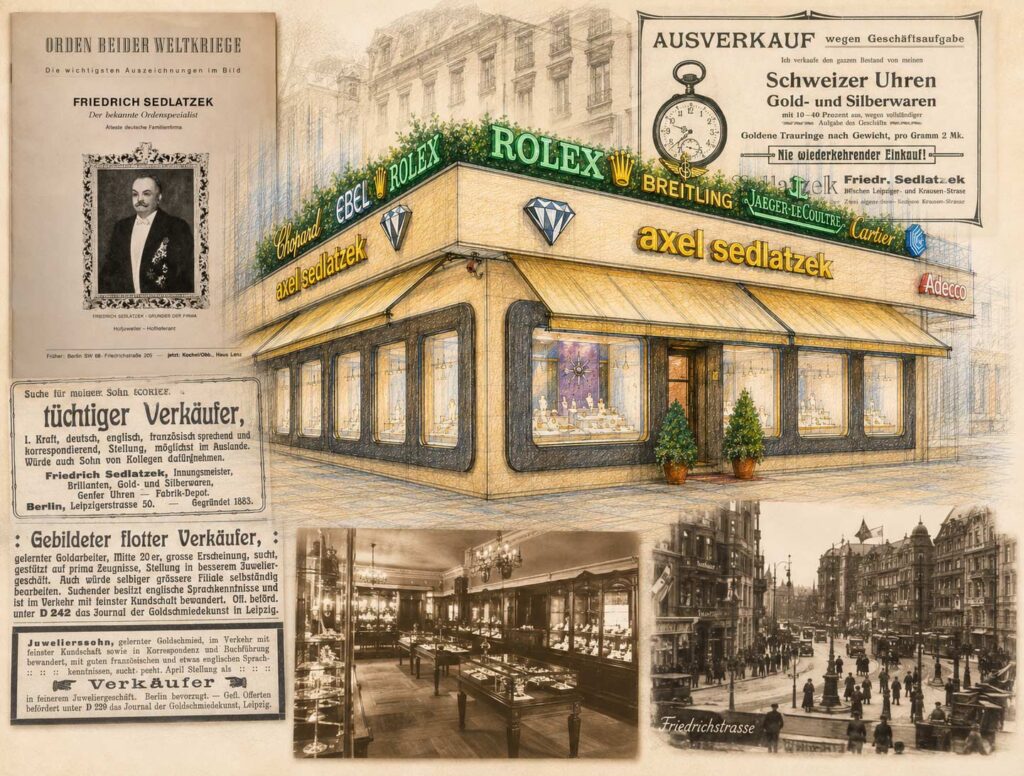
Sedlatzek – The Diamond of Kurfürstendamm
This is the moving story of the Sedlatzeks – a family of jewellers – from their beginnings as goldsmiths in Breslau to becoming Berlin’s last great jewelling dynasty
Berlin has produced many great merchant families. Names such as Wertheim, Tietz and Kempinski are still well known today. Yet when it comes to the history of Berlin’s jewellers, one family is often overlooked – even though for over a century it was among the most respected in the trade: Sedlatzek.
Their story does not begin on Kurfürstendamm, nor on the glamorous Friedrichstraße. It begins in the late 19th century in what was then Breslau. What began as a small goldsmith’s workshop grew into a business that spanned several generations, weathered two world wars and eventually became arguably the most famous jeweller on Kurfürstendamm. It is a story of masterful craftsmanship, entrepreneurial courage, war and reconstruction, spectacular robberies and the transformation of Berlin itself.
Hardly any other Berlin jeweller embodies the German capital’s journey – from the German Empire through the Roaring Twenties, the destruction of the Second World War and the division of the city, to the modern luxury boulevard on Kurfürstendamm – as impressively as the Sedlatzek family.
A goldsmith looks towards Berlin
The family’s roots lie in what was then Breslau, one of the most important commercial and cultural centres of the German Empire. It was there, towards the end of the 19th century that the goldsmith and merchant Friedrich Sedlatzek founded a business specialising in goldsmithing, jewellery, silverware, gemstones and watches.
Breslau was a prosperous city with strong purchasing power. Nevertheless, Friedrich Sedlatzek recognised early on that Germany’s economic centre was shifting towards Berlin. The imperial capital was growing at a pace unprecedented until then. Thousands of entrepreneurs, bankers, industrialists and wealthy citizens turned Berlin into the largest metropolis in Central Europe – and one of the most important markets for high-quality jewellery.
For an ambitious goldsmith, Berlin was the place where the future would be decided.
The Hausvogteiviertel – the heart of Berlin’s jewellery world
By moving to Berlin, Sedlatzek entered the premier league of the German jewellery trade.
His company set up shop in the famous Hausvogteiviertel, the historic quarter centred on Hausvogteiplatz, which for decades was regarded as the centre of the German jewellery, goldsmithing and ready-to-wear industries. Between Gertraudenstraße, Jerusalemer Straße and Mohrenstraße, goldsmiths, gemstone dealers, diamond cutters and jewellers lined the streets.
Some of Berlin’s most famous names worked here: Wilh. Müller, Sy & Wagner, Richard Lebram, the Friedländer brothers and many others.
Sedlatzek also established itself in this extraordinary neighbourhood. The company quickly gained an excellent reputation for high-quality diamonds, carefully selected gemstones, elegant jewellery and precision watchmaking. Craftsmanship and personalised advice became the family’s hallmark.
A Berlin jewellery dynasty is born
As the business flourished, the family grew alongside it. Several of Friedrich Sedlatzek’s sons joined the firm and later opened their own shops in Berlin.
Rather than limiting themselves to a single flagship store, a small jewellery dynasty with several branches emerged. The name Sedlatzek became a household name in Berlin’s jewellery industry and stood for reliability, the highest quality and personal trust – values that were invaluable in the jewellery trade.
Berlin is growing – and Sedlatzek is growing with it
When Friedrich Sedlatzek arrived in Berlin at the end of the 19th century, the imperial capital was in the grip of an unprecedented spirit of optimism. New factories, banks, hotels and elegant commercial buildings were springing up everywhere. Berlin’s population had surpassed the two-million mark; wealthy industrialists and merchants shaped the cityscape, and demand for luxury jewellery rose year on year.
For a goldsmith and jeweller, Berlin offered the ideal conditions. Anyone who could offer quality, craftsmanship and trust would find a discerning and affluent clientele here.
It was precisely this opportunity that Friedrich Sedlatzek seized.
Between diamonds and the crown jewels
Within just a few years of its foundation, Sedlatzek had become one of Berlin’s most prestigious jewellery houses.
The company dealt in high-quality diamonds, gold jewellery, silverware, pearls and exclusive watches. At the same time, the firm had its own workshop where jewellery was crafted, repaired or remodelled according to customers’ individual wishes.
In those days, a jeweller was far more than just a retailer. He was a goldsmith, a gemmologist, a watchmaker and often also an adviser to his customers. It was precisely this personal relationship of trust that defined a firm’s reputation.
Berlin’s Jewellery Quarter
The company’s headquarters in Berlin’s Hausvogtei district was no coincidence.
Since the imperial era, the most important centre of the German jewellery and precious metals industry had developed around Hausvogteiplatz. Here, goldsmiths, gemstone dealers, diamond cutters, engravers and silversmiths worked side by side. Sedlatzek’s neighbours included well-known names such as Wilh. Müller, Richard Lebram, Sy & Wagner and the Friedländer brothers. Many of these companies supplied jewellers throughout Europe, making Berlin one of the continent’s most important jewellery hubs. In this environment, Sedlatzek became an integral part of Berlin’s jewellery scene.
Jewellery, watches – and medals
From an early stage, Sedlatzek distinguished itself from many of its competitors through an unusually wide range of products.
As well as exclusive jewellery, gold and silverware, the firm stocked high-quality pocket watches and, later, wristwatches from renowned manufacturers.
Furthermore, Sedlatzek became a well-known destination for orders and decorations. Officers, civil servants and veterans had their awards altered, repaired or professionally restored here. The in-house goldsmith’s workshop possessed the craftsmanship required to repair damaged pieces or recreate missing elements true to the original.
To this day, the so-called ‘Sedlatzek Knight’s Crosses’ continue to fascinate historians and collectors alike. According to current research, Sedlatzek was not an official manufacturer of state Knight’s Crosses. However, as a renowned Berlin jeweller, the company did have a workshop where orders of chivalry were refurbished, supplemented and sold under its own name.
The First World War changed everything
With the outbreak of the First World War in 1914, life changed abruptly.
Luxury goods initially lost their appeal. Precious metals became scarce and many customers had to cut back on their spending. At the same time, the trade in medals and military honours grew in importance. Sedlatzek weathered this period too, thanks to the quality of its craftsmanship and its entrepreneurial adaptability.
The Golden Twenties
After the difficult war years, Berlin came back to life.
Friedrichstraße became the promenade of high society. Luxury hotels, theatres and coffee houses attracted visitors from all over the world. Wealthy entrepreneurs, actors, artists and diplomats were among the customers of Berlin’s jewellers.
Sedlatzek’s shop windows reflected the contemporary tastes of the era. Elegant Art Deco jewellery, finely crafted platinum settings, sparkling diamonds and high-quality wristwatches made the shop a fixture of Berlin high society.
The Great Depression
With the stock market crash of 1929, the luxury goods trade also came under pressure.
Many Berlin jewellers were forced to close their shops or scale back their operations significantly.
Sedlatzek weathered these difficult years. In times of economic uncertainty, wealthy clients in particular preferred to invest in enduring assets. Gold, diamonds and high-quality jewellery were regarded as safe investments and retained their value.
The Years of National Socialism
The Nazis’ rise to power marked the beginning of one of the darkest chapters in Berlin’s economic history.
Many Jewish jeweller families were stripped of their rights, expropriated or forced to emigrate. Long-established businesses such as the Friedländer brothers or Sy & Wagner disappeared from Berlin’s business scene.
As far as current research is concerned, there is no reliable evidence to suggest that the Sedlatzek family’s business was itself affected by so-called ‘Aryanisation’ or that it was involved in such measures. Historical research relies on verifiable sources – where these are lacking, speculation is out of the question.
War and the loss of a world
The Second World War brought the golden age of Berlin’s luxury shops to an end.
The bombing of Berlin destroyed large parts of the city centre. The Sedlatzek family’s commercial premises were also severely damaged or completely destroyed. Stock, workshops and assets built up over decades vanished amid the rubble.
Many of Berlin’s long-established jewellers ceased to exist after 1945.
Yet the Sedlatzek story was not yet over.
A fresh start
Like many Berlin families, the Sedlatzeks had to start practically from scratch after 1945.
Herbert Sedlatzek initially ran the business from a private flat on Düsseldorfer Straße. With patience, craftsmanship and the trust of long-standing customers, a thriving business gradually emerged once more.
It was a quiet new beginning – without grand shop windows or opulent façades. Yet it was precisely this modesty that laid the foundations for the company’s later success.
Kurfürstendamm becomes the new stage
In the 1960s and 1970s, the economic centre of West Berlin increasingly shifted to Kurfürstendamm.
Axel Sedlatzek recognised this trend early on. In 1974, the company opened its prestigious shop at Kurfürstendamm 45. The move proved to be visionary. Within a few years, Sedlatzek had become one of the city’s best-known jewellers. Generations of Berliners associated the shop with engagements, weddings, anniversaries and special milestones in their lives.
“The Diamond from Kurfürstendamm”
This advertising slogan made the company famous far beyond Berlin. The phrase became the hallmark of an entire generation. Sedlatzek stood for exceptional diamonds, classic elegance and personalised advice – values that characterised the company for decades.
Success attracts attention
However, as the business flourished, so too did the risks. In 2001, Sedlatzek fell victim to a series of spectacular robberies within the space of a few months. Masked perpetrators stormed the shop, rammed the shopfront with vehicles or threatened staff with firearms.
Particularly shocking was the kidnapping of Ronald Sedlatzek, who was overpowered outside his home and later released. The robberies made headlines across the country and highlighted the dangers to which luxury jewellers were now exposed.
The end of a great Berlin family history
After more than a century of successful business history, Axel Sedlatzek decided in 2004 to sell the long-established firm to the Swiss jeweller Bucherer.
This marked the end of the independent operation of one of Berlin’s last great family-run jewellers. Ronald Sedlatzek remained connected to the luxury sector and later continued his career as managing director of the Chopard boutique in Berlin.
The Sedlatzek Legacy
Today, there is little left to remind us of the time-honoured name Sedlatzek. Yet its history is inextricably linked to the history of Berlin.
From its beginnings in Breslau, through the Hausvogteiviertel, the heyday of the Golden Twenties, the destruction of the Second World War and the reconstruction of West Berlin, right up to the legendary shop on Kurfürstendamm, the family’s history reflects the transformation of an entire city.
Whilst many famous Berlin jewellers disappeared as a result of war, expropriation or economic upheaval, Sedlatzek managed, over the course of generations, to reinvent itself time and again. It is precisely this extraordinary continuity that makes the family one of Berlin’s most significant jewelling dynasties.
The name Sedlatzek therefore stands for more than just sparkling diamonds and exclusive jewellery. It represents over 120 years of Berlin’s economic, cultural and family history – and the legacy of a house that has earned its place amongst the great, now almost forgotten, Berlin jewellers.
Note: Success cannot be bought. After several years, Bucherer left Sedlatzek’s former premises and opened a counter in the famous KaDeWe department store. The takeover proved not to be sustainable. The trust that Sedlatzek had built up among Berliners could not be acquired. Not for any price in the world.
Das könnte Ihnen auch gefallen
The struggle for personal rights, recognition and equal rights in society has been fought in many places for centuries. The so called Pride movement is one of the longest lasting and still restless active actions. It is about the equal rights and the acceptance of homosexuals in the world. There is evidence of the beginning […]
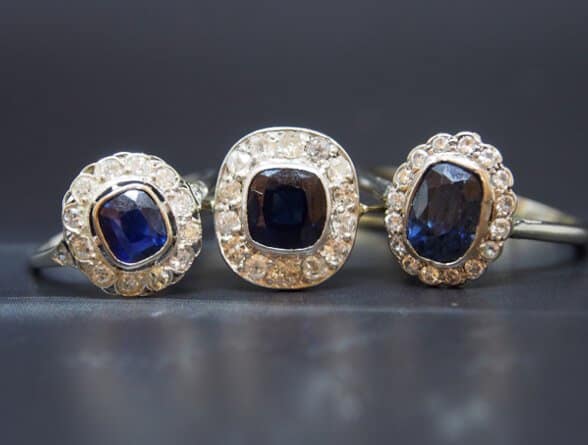
The sapphire is a perfect gemstone for engagement rings. His blue stands for loyalty, harmony and contentment. With this, important attributes for the romantic event are already ideally expressed with this color stone. Especially in the Edwardian period, beginning of the 20th century, sapphires were set as an eye-catcher in yellow and white gold rings. […]
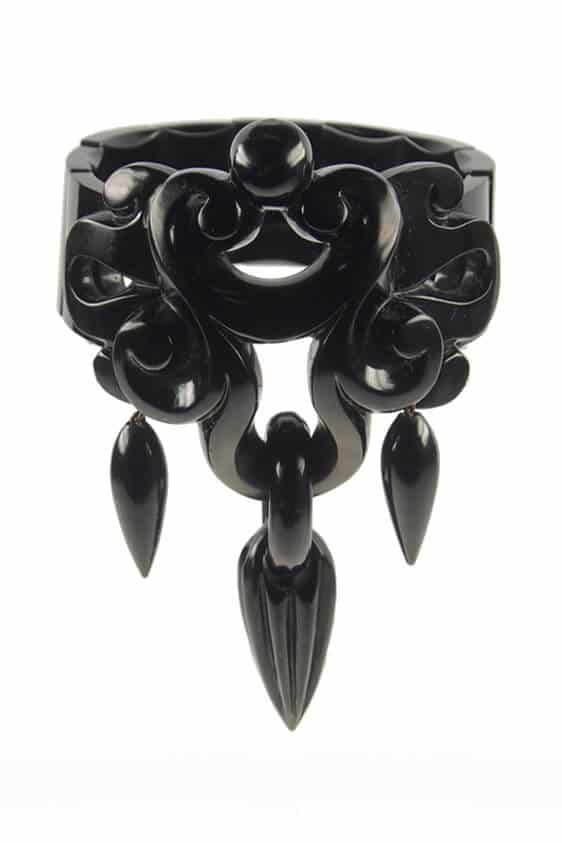
The best way to describe Victorian jewellery with one word is “soulful”. It describes love and memory, with its representing symbols such as heart and hands, snakes and knots. The strict rules of the Victorian period of mourning as of 1861, asked the fact, that the pieces of jewellery should be black in the first […]
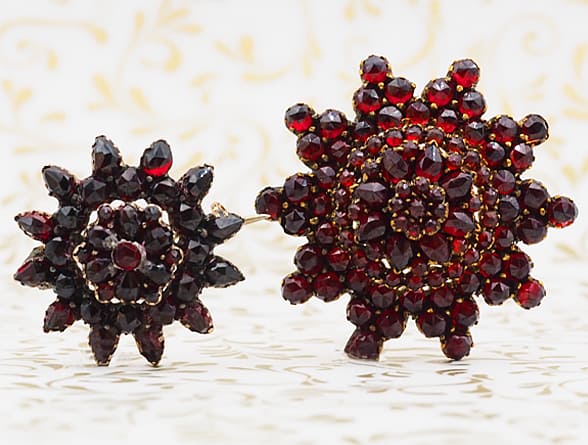
The year of the luck stones always begins with the warm red of the garnet. Even if the winters are not as cold as they were a few years ago, we like it warm around the heart. The extremely versatile and kindhearted gemstone garnet is positioned just right here. Since ancient times it has been […]
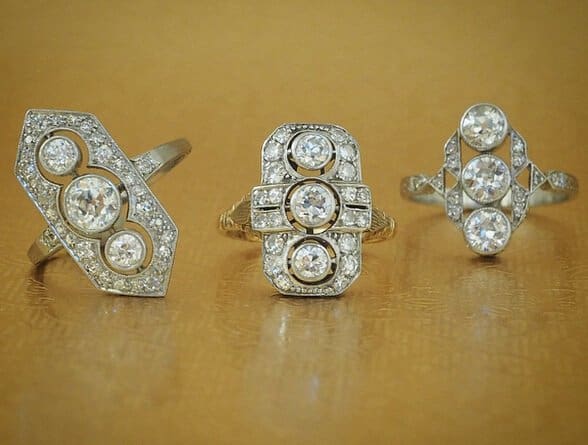
Dear Customers, your team from Rheinfrank – Antique Jewellery wishes you all a happy and healthy new year! Together we hope for an exciting as well as harmonious year with perfectly set highlights – and if possible, many of them! We for our part in the last year we have looked very closely and listened […]
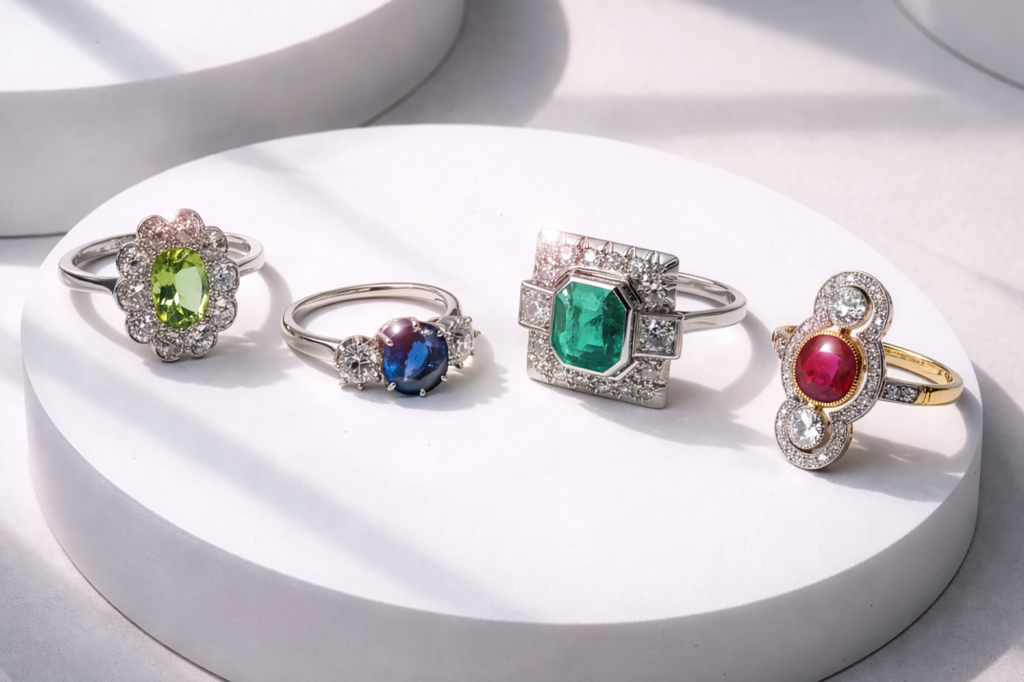
Historic and uniquely crafted antique rings are a perfect mirror for the couple embarking on life together. Of lasting value, antique engagement rings are the sought-after, exclusive alternative to today’s mass produced designs. At Rheinfrank & Holzfuss, with our elegant showrooms in Berlin and Munich, clients will find Europe’s largest selection of antique engagement rings — […]